The Kiama Blowhole: A Visitor Guide to the Headland
The Kiama Blowhole: A Complete Visitor Guide
One of the Largest Sea Blowholes in Australia
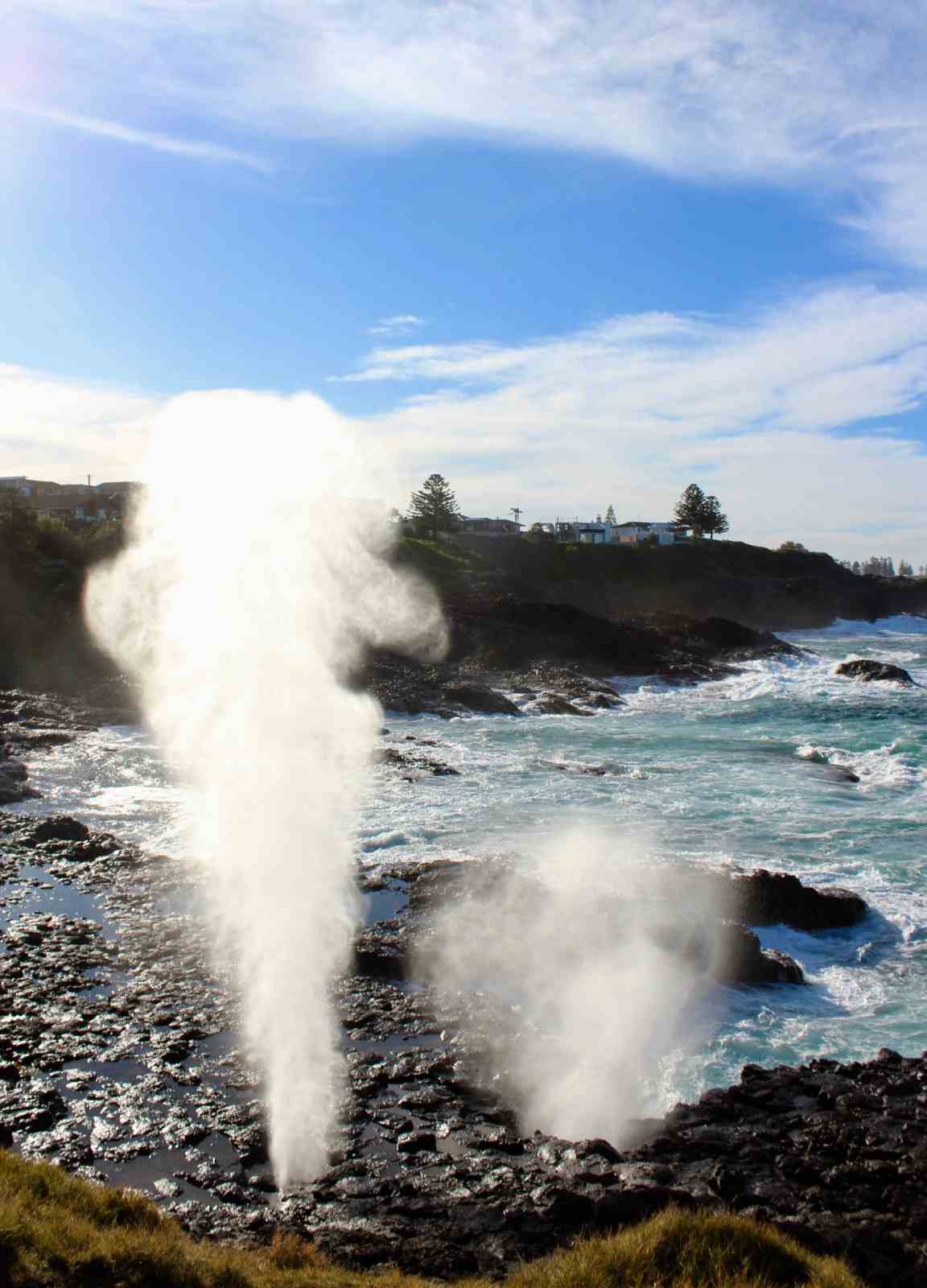
The Kiama Blowhole is the town's defining natural landmark. When a south-easterly swell rolls into the basalt headland, the sea forces itself through a chamber in the rock and erupts skyward, sometimes as a whisper and sometimes as a plume that clears the viewing platform by many metres. On a quiet day it simply hisses and settles back. On the right day, it is unforgettable.
This guide covers everything worth knowing before you visit: how the Blowhole was formed, when it actually erupts, where to stand, and how to see both the main Blowhole and the smaller Little Blowhole further south.
Getting There and Practical Details
The Blowhole sits on Blowhole Point Road at the eastern edge of Kiama town. Entry is free, the viewing platform stays open around the clock, and the headland is floodlit at night, which turns an evening visit into one of the more unusual free experiences on the NSW coast. Kiama itself is around ninety minutes south of Sydney by car via the M1 and Princes Motorway, or just under two hours by train on the South Coast Line from Central Station. The station sits within an easy walk of the headland. Parking is available near the point, though the main car park is small and fills quickly on warm-weather weekends.
What Is the Kiama Blowhole?
A blowhole is a sea cave with an opening at the top. When ocean waves surge into the cave, the trapped air and water are forced upward through the opening, creating a vertical spout. The larger the cave and the smaller the opening, the higher the water is pushed into the air. The Kiama Blowhole sits inside a basalt rock formation on Blowhole Point Headland, at the eastern edge of the town centre, and is one of the largest sea blowholes in Australia.
How the Blowhole Works
The formation dates back to a period of volcanic activity along what is now the New South Wales coastline, which left behind hard, columnar basalt. Over long stretches of time, softer rock trapped inside a joint of that basalt was eroded by ocean waves, hollowing out a chamber. The chamber has a wide opening at sea level and a narrower opening above.
When a wave enters the chamber, the compressed air and water find the only available escape route, straight up through the narrower top. The narrower the opening, the higher the spray.
When Does the Blowhole Erupt?
The Blowhole does not follow a timetable. It responds to swell and tide, so a spectacular morning can be followed by a quiet afternoon on the same day. The most dependable conditions are a strong south-easterly swell combined with a rising tide, and eruptions tend to be biggest through the cooler months when Tasman lows push consistent swell up the coast.
Before making the drive, it is worth checking a live swell forecast. The Bureau of Meteorology's Illawarra marine forecast gives a reliable read on the previous twenty-four hours and the day ahead. On a small-swell, offshore-wind day, expect a subtle show at best.
The Little Blowhole: Kiama's Quieter Second Act
South of the main headland sits Little Blowhole, a smaller and often more reliable sibling. It is closer to sea level, less exposed to the crowds, and often performs when the main Blowhole is quiet, because it responds better to easterly swell that hits the cliff face directly.
The lookout is a short walk from Tingira Crescent, with parking on the street and a fenced viewing area at the edge of the rocks. Many locals prefer it. If you have time for both, walk between them along the walking track between the two blowholes, which follows the clifftop with ocean views the entire way.
When to Visit: Day, Night, and Everything in Between
Early morning gives you the clearest light and the smallest crowds. Between 7am and 10am, especially in the cooler months, the headland is often quiet enough to hear the swell hitting the base of the cliff. Night visits are a genuine alternative thanks to the floodlighting, and on a big-swell night the illuminated spray against a dark sky is dramatic. Bring a windproof layer whenever you visit. The headland is exposed to the ocean on three sides.
What Else to See on the Headland
The Blowhole is the headline, but the immediate surroundings hold more than a single stop's worth of visiting. Kiama Lighthouse, built in the late 1800s, stands metres from the Blowhole and remains an operational light, its white-and-green trim now the visual signature of the town. Next to the lighthouse, the Kiama Pilot's Cottage Museum holds the local history of the headland, including one of the more surprising incidents in the Blowhole's history. The Blowhole Point Ocean Pool sits at the base of the headland, sheltered from the open ocean but refreshed by each tide, and Kiama Harbour wraps around the southern edge of the point, with cafés, fishing boats, and the northern end of the Kiama Coast Walk.
For guests staying in one of our premium suites kiama rooms at The Bellevue Boutique Hotel, the Blowhole is a short walk from the front door.
Frequently Asked Questions
Related Articles
The Shoalhaven Coast Wine Region: A Coastal Treasure: a cellar door route through the wineries south of Kiama.
The Ultimate Getaway Destination for Your Bucket List: reasons Kiama sits on any NSW South Coast bucket list.
Custom HTML/CSS/JavaScript
Plan Your Visit
The Kiama Blowhole rewards a slow visit rather than a quick stop. Time it right, bring a jacket, and give yourself a full morning or a lit evening to take in both the main Blowhole and Little Blowhole. Guests looking for kiama accommodation nsw within walking distance of the headland will find The Bellevue Boutique Hotel a natural base for exploring the town on foot.