Whale Watching from Kiama's Headlands: A Local Guide to the 2026 Season
Whale Watching from Kiama's Headlands: A Local Guide to the 2026 Season
Kiama sits directly on the humpback whale highway. Between May and November each year, roughly 40,000 humpbacks migrate along the east coast of Australia, and Kiama's headlands offer some of the closest land-based views on the entire route.
This is a working guide to seeing whales from land in Kiama, written for the 2026 season. It covers the best months, the best headlands, what to look for, and the small timing choices that turn a maybe into a certainty.
When Whales Pass Kiama, Month by Month
Whale season in Kiama runs from early May to late November, split into two migrations. The northbound leg brings adult humpbacks heading to warmer breeding waters. The southbound leg brings mothers with new calves returning to Antarctica, and this is when the whales travel closest to shore.
According to NSW National Parks whale migration data, the pattern along the Illawarra and South Coast looks like this:
The single best window is late September through mid-October. The Time Out whale watching guide notes that southbound mothers travel closer to shore because they are protecting calves and need calmer water. Closer whales mean easier viewing from land.
The Best Land-Based Whale Watching Spots in Kiama
Kiama's advantage is density. Five genuinely good headlands sit within a fifteen-minute drive of the town centre, and three of them are walkable from central Kiama.
1. Kiama Blowhole Point and the Lighthouse
The most popular spot, and rightly so. The elevated basalt headland gives a wide view north and south, and the lighthouse benches offer the only sheltered seating on the point. On days with a decent southerly swell, you get whales in the middle distance and thirty-metre spouts of seawater at your feet.
Arrive early. The car park fills by mid-morning through October, and the best light for whale watching sits between 7am and 10am before glare builds on the water.
2. Little Blowhole
Fifteen minutes south of the main Blowhole by foot, Little Blowhole is quieter and often better for patient watching. Elevation is slightly lower, but the point juts further east into the water, putting you a few hundred metres closer to the migration line. Locals prefer it.
3. Bombo Headland
North of Kiama, Bombo is the dramatic one. Cathedral Rocks, a ridgeline of jagged basalt columns formed when ancient lava cooled and cracked, sits at the end of the headland. Whales pass close here on the northbound leg. Bombo is dog-friendly, and the rocks get slippery when spray hits them, so wear sturdy shoes.
4. Minnamurra Whale Watching Platform
A purpose-built elevated platform at Minnamurra Headland, roughly ten minutes north of Kiama by car. The platform sits high enough to see whales at a distance and close enough to hear them breathe on quiet mornings when they pass near shore. It ranks as one of the best on-land viewing spots on the whole South Coast.
Minnamurra is also the northern end of the Kiama Coast Walk. If you are combining whale watching with a walk, our full walking route between the Kiama headlands covers the connecting track down to Bombo.
Note that the Minnamurra platform is not wheelchair accessible. For an accessible option, Kiama Harbour and Blowhole Point are your best choices.
5. Kiama Harbour
The easiest option. If you cannot walk far, or if the weather is closing in, sit on one of the benches around Kiama Harbour and watch the water. It is not the highest vantage, but southbound whales sometimes come into the harbour mouth itself, and the view is unobstructed all the way to the horizon.
What You'll Actually See
Set expectations. Most whale sightings from land are a blow (the vertical spout of exhaled breath), a dark curve of back breaking the surface, and a tail fluke as the whale dives. That is a good sighting, and it is what most guided boat tours also deliver.
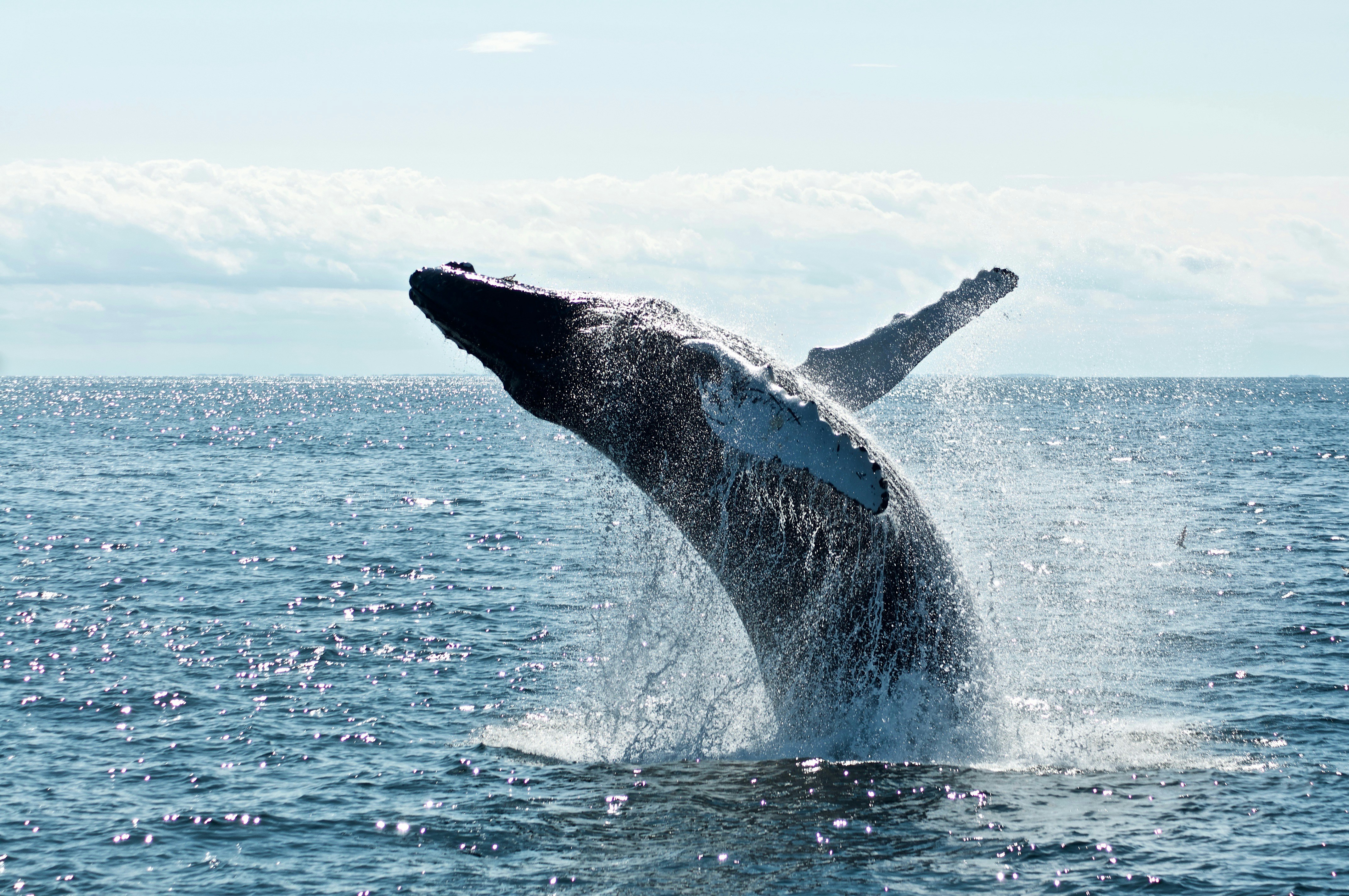
The rarer sightings include breaches, when the whole whale clears the water and slams back down (October is peak breach month). Spyhopping, when the whale lifts its head vertically out of the water to look around, is most common at Minnamurra where the water sits calm enough for a whale to hold position. Tail slaps and pec slaps are communication behaviour: if you see one whale doing it, look for a second whale nearby responding. Southbound mothers travel with calves close to the surface, so if you see a whale that looks small, look immediately behind it for the mother.
What to Bring, and When to Go
Three things earn their place in a small bag: binoculars from 8x42 upwards, a windproof shell layer, and a hot drink. Phone cameras will not capture whales from the headland. Binoculars turn a dot into a whale. The shell matters because Kiama's headlands stay exposed to southerly winds even in October. The hot drink keeps you at the bench long enough to see something.
The NSW Government's Wild About Whales app crowdsources live sightings from headlands up and down the coast. Check it before you leave the room to see whether whales are already being spotted that morning.
Three timing rules from watching this coast season after season. Morning beats afternoon. Calm water beats a big swell. A southerly change often pushes whales closer to the cliffs on the northbound leg, so bring the shell and go anyway.
Frequently Asked Questions
When is the best month for whale watching in Kiama?
October is the best single month. Peak southbound migration brings mothers with calves close to shore, sightings are frequent, and breaches and tail slaps are more common than in earlier months.
Can you see whales from Kiama without a boat?
Yes. Kiama has five land-based viewing spots within fifteen minutes of the town centre. Boat tours give you closer views, but headland watching from Blowhole Point, Minnamurra, or Bombo delivers regular sightings throughout the season.
What time of day is best for whale watching?
Early morning, between 7am and 10am. The light is clear, glare is minimal, and winds are usually lighter. Sightings continue through the day but the water is harder to read after midday.
Do you need binoculars to see whales in Kiama?
You can see blows and backs with the naked eye during peak season. Binoculars turn distant sightings into recognisable whale behaviour and are worth the space in a day bag.
Is the Minnamurra whale watching platform accessible?
No, the Minnamurra platform does not cater for people with access needs. Kiama Harbour and the paved sections around Blowhole Point are better choices for wheelchair or mobility-aided visitors.
Plan Your Stay
Kiama is 90 minutes south of Sydney by car and just under two hours by train from Central. If you are travelling for whales, arrive Friday afternoon and stay through Sunday. That gives you two full mornings on the headlands, which is what the season rewards.
For luxury accommodation in Kiama with a walk to Blowhole Point and Little Blowhole, our wraparound verandahs face east over the same water the whales pass through. Guests staying in September and October regularly see whales without leaving the balcony.